By Dr Greg McMillan GMAPS EFIAP EPSA BPSA
Photography as a Serious Hobby
This article stems from a recent conversation with a fellow photographer who explained that they are not a street photographer. They also mentioned that a recently awarded image in a street-themed exhibition was simply ‘I just got lucky.’ Knowing the skills of this photographer and the quality of the image, I respectfully disagree. While good fortune may have played a role, luck did not. I’m not being critical of the term itself, I’ve used it about my own work.
Many photographers have a clear focus on a singular theme or genre, and I deeply admire street photographers who have both the intent and skills to take and create images that fit within a ‘Street’ or ‘Social’ genre. Of course, the definition of a ‘street‘ image varies; however, at its core, street (or social documentary) photography is rooted in capturing authentic, everyday life.
I don’t see myself as a specialist street or social documentary photographer and while I at times take street or social images, I consider myself more a broad generalist. I also find the challenge of photographing people in street settings to be quite daunting. It is in this context I wanted to share a perspective on ‘luck or good fortune’ as it relates to street and social documentary photography, although this could easily be applied to any genre of photography.
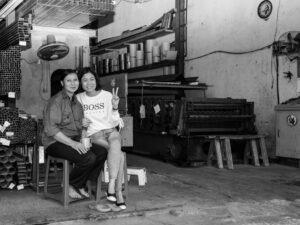
From 2018 onwards, I’ve had numerous opportunities to work in Vietnam. Whenever I wasn’t working, I would walk the streets with my camera and explore. One day in Thai Nguyen (about 1.5 hours north of Hanoi), I found myself walking the streets on International Women’s Day. I spotted two women sharing a quiet moment together. A smile, a polite raising of my camera to seek permission, and then a photograph—followed by sharing the image with them on my camera’s view screen. The setting was natural, but its full impact might be lost on viewers unaware of the date. While I initially considered naming the image ‘International Women’s Day,’ I settled on ‘The Boss’ instead.
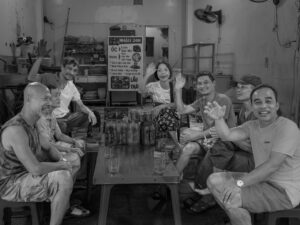
On one rainy afternoon in Hanoi, a colleague and I decided to head out for a walk. My suggestion to avoid the busy tourist area led us down local streets with traders and residents going about their day. We came across a group of people sitting in a café. It was clear they were the owners, friends, or regular customers. With no shared language beyond smiles and basic greetings, we were kindly invited to sit and enjoy tea. I captured a candid farewell moment and called it ‘Friendly Chat.’ Despite our offers to pay for the tea, the group graciously smiled and declined. We left feeling like we had made a small, positive contribution to building rapport between Australia and Vietnam.
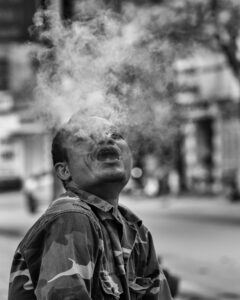
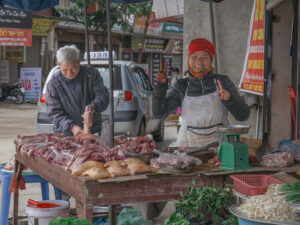
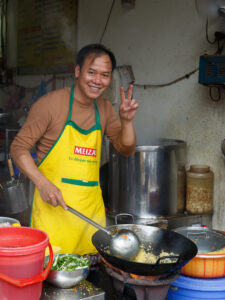
Similarly, in Son La in far northwest of North Vietnam, I had many meaningful interactions with locals and captured moments from everyday life. Images like ‘The Smoker,’ ‘Local Butcher,’ and ‘Best Fried Rice’ raise the question of whether they fit the street or social documentary genre. The nuances between these definitions are perhaps less relevant if you are simply sharing your images or creating something for your own purposes. However, if you are looking to enter images into an exhibition/competition, it is important to read and understand any section definition before submitting images.
Importantly these moments were captured through a deliberate intent of walking the streets with a camera in hand and with the intent of taking street, social or even photojournalism style images. A small but significant point to note: on subsequent visits to the area, I printed and returned with A4 prints to give to the individuals photographed and this was one way that I was able to show my appreciation for being ‘allowed’ to take the photograph. Returning with a print is of course not typically possible; however, where I have taken images of guides, drivers or others with whom I have interfaced, I will, where possible, send a digital copy of an image to that person as a way of showing my thanks and respect.
So, how much luck went into capturing these photographs? Likely as much as goes into yours. The more often you go out, the more you focus on developing your skills, the luckier or rather, the more fortunate you’re likely to be. Yes, there was good fortune in finding two women on that day wearing that ‘Boss’ top, but if I was not walking the streets, I would not have seen what I saw.
So if luck refers to positive outcomes from random chance, I prefer seeking good fortune, implying success comes from deliberate effort and planning. These deliberate behaviours are typical among many of the photographers I meet.
Whether you take a genre-focused approach to capturing street or social documentary images or prefer a generalist approach like mine, I won’t wish you luck in your photography endeavours. Instead, I wish you good fortune knowing that your good fortune will likely be heavily influenced by your intent and endeavours.